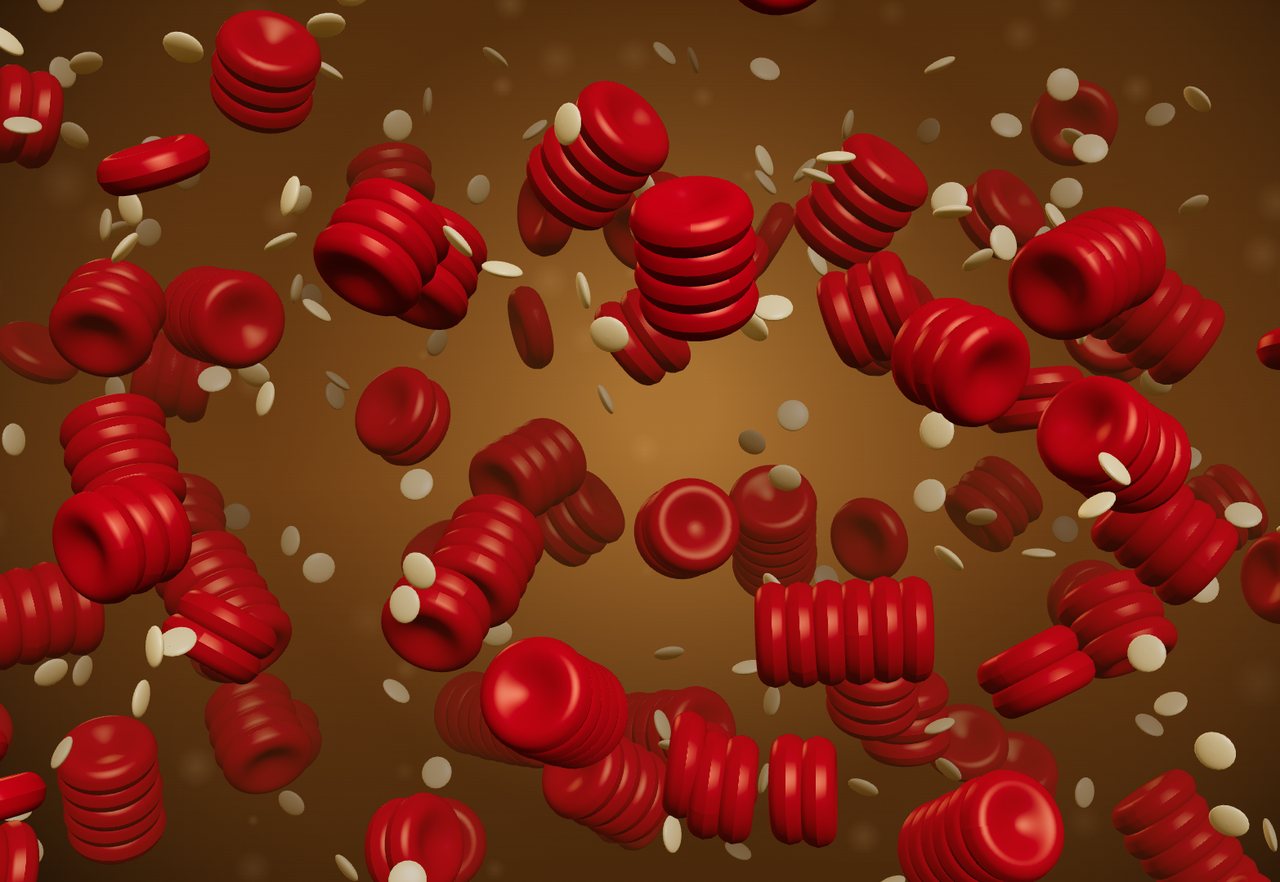
Red cells stack into rouleaux
A premixed proprietary polymer solution promotes red-cell aggregation. The stacks settle much faster than single cells.

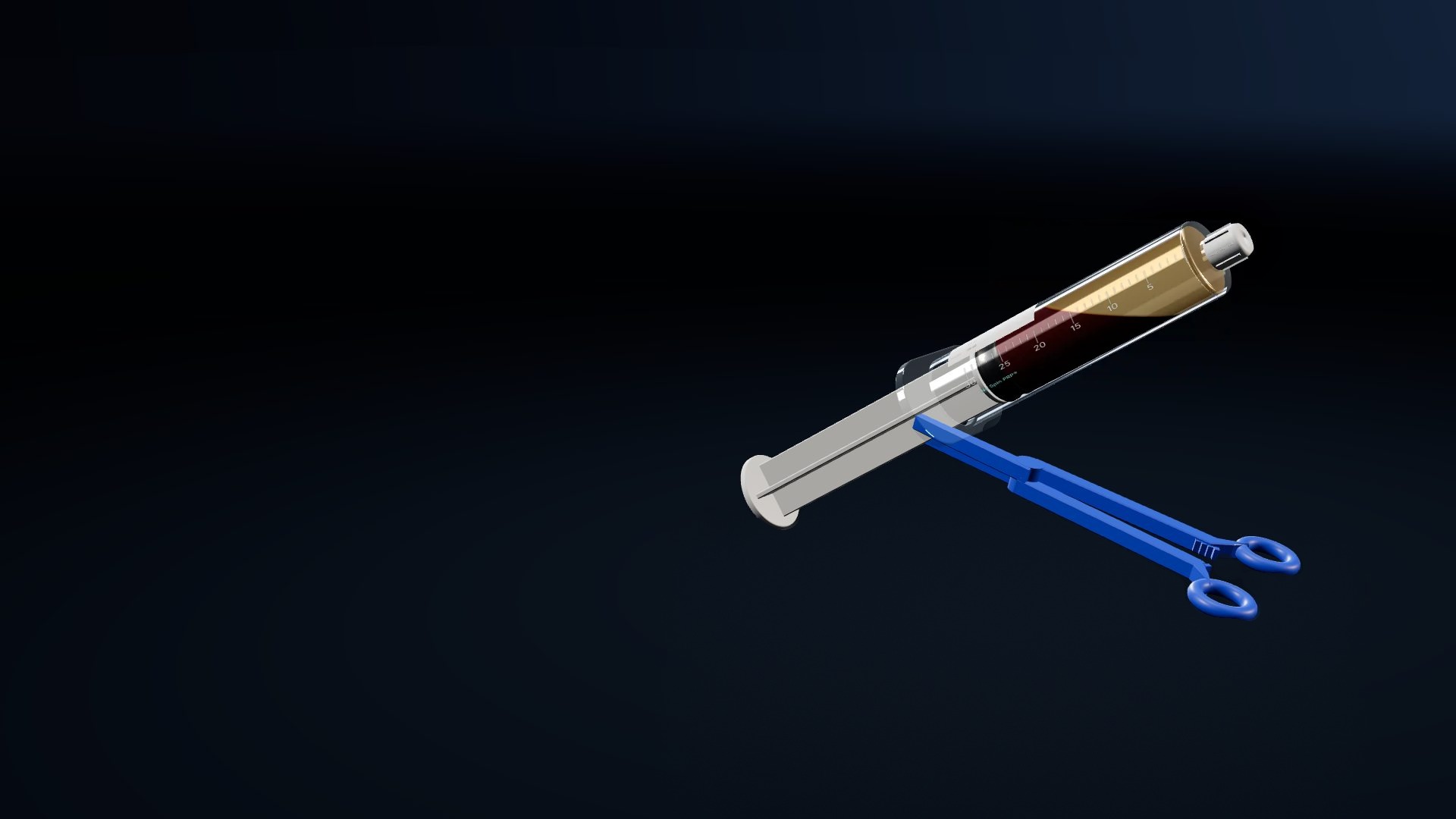
Platelet-rich plasma, separated at normal gravity in a single-use kit. No centrifuge.
Investigational device. Not cleared or approved by the U.S. FDA and not available for sale.
A proprietary polymer solution stacks red cells into rouleaux. A 30° tilt lets them settle fast while plasma rises along the upper wall.
A premixed proprietary polymer solution promotes red-cell aggregation. The stacks settle much faster than single cells.
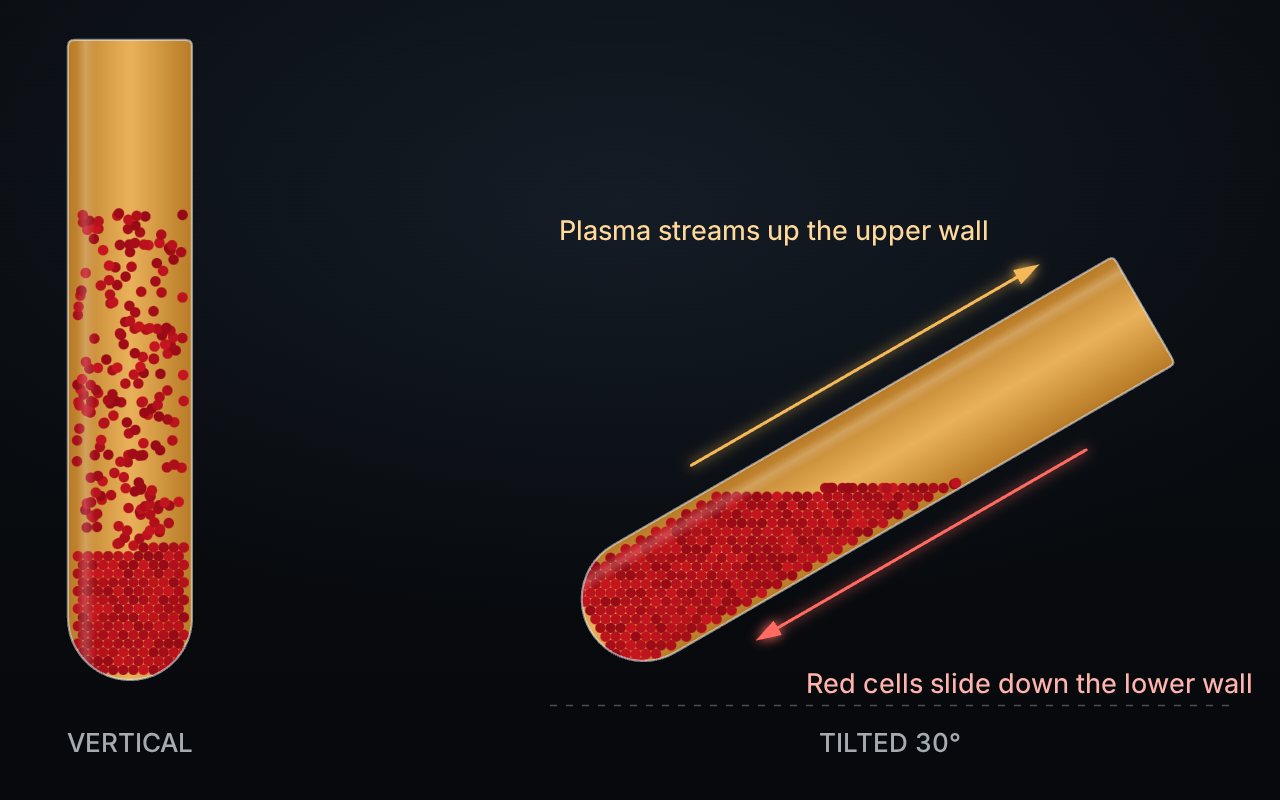
Tip up at about 30°, red cells fall a short distance to the lower wall and slide down it.

The plasma is transferred to a second syringe through a Luer connector, leaving the red cells behind.
Development footage of an earlier 50 mL prototype at normal gravity: red cells settle and an upper plasma layer forms. Time-lapse.
Visual appearance alone does not establish platelet count, function, or sterility.

Everything that touches the blood is single-use.
Working configuration under development. A second sterile 20 mL syringe, supplied by the user, collects the plasma.
Preparation of autologous platelet-rich plasma at the point of care for mixing with autograft and/or allograft bone before application to a bony defect, to improve handling characteristics.
Proposed intended use, under development. Current planned research is ex vivo; study PRP and graft are not administered to participants.
Cell counts, platelet concentration, and pH of the prepared plasma.
Activation state and responsiveness of platelets after preparation.
How PRP–graft mixtures handle compared with appropriate controls.

OcuSera, Inc. was founded in 2023 by Justin Karlin, MD, MS, an ophthalmologist and oculofacial plastic surgeon with more than 55 peer-reviewed publications.
About OcuSeraWe welcome conversations with researchers, clinicians, and investors interested in centrifuge-free PRP preparation.
Contact OcuSera